Apple TV is getting some competition from Blockbuster. The home video giant is developing a set-top device for streaming films directly to TV sets and is expected to announce the offering sometime this month.
Blockbuster declined comment, but a spokeswoman for the company said: "We're talking to numerous companies and vendors about products, services, alliances and initiatives that can help us achieve our mission to transform Blockbuster into a company that provides access to media content across multiple channels -- from our stores, by mail, through kiosks, through downloading, through portable content-enabled devices -- so it's not surprising that there are rumours out there."
The device would join a growing roster of initiatives that aim to bring broadband video to the living room, including Apple TV, which hasn't quite seen sales match the hype surrounding the product. Blockbuster rival Netflix also has indicated that it will compete in this market with a similar device being created with LG Electronics.
The product would be an offshoot of Movielink, the online film service Blockbuster acquired last year that allows consumers to watch films licensed from the major studios on their PCs. Delivering movies to TV might be the most audacious attempt yet that Blockbuster is making to reinvent its brand as digital delivery weakens the viability of its retail footprint. But by offering a home-based alternative to its stores, Blockbuster risks cannibalizing its core brick-and-mortar business in the hope that its brand will be a force online.
The device is believed to be a stand-alone product akin to Apple TV as opposed to embedding a Blockbuster-branded service in such existing devices as Microsoft's Xbox 360 or TiVo. While going it alone could give it a distinctive positioning in the crowded "over-the-top TV" marketplace, that won't come without significant investment in marketing and manufacturing, though the latter cost might be shared with a consumer electronics company that has yet to disclose its participation.
Blockbuster knows all too well the importance of online film rentals. When Apple said in January that iTunes would adopt a rental model, it sent Blockbuster's stock plummeting 17% to an all-time closing low of $2.69. Its shares closed down 15 cents, or 4.5%, at $3.20 on the New York Stock Exchange Wednesday, a long way from its 52-week high of $6.61.
Movielink was created in 2002 by MGM, Paramount, Sony, Universal and Warners. Five years later, the under-performing venture was sold to Blockbuster for $6.6 million. The deals give Blockbuster online rights to about 6,000 movies, though there are restrictions on moving content beyond PCs and TV. Blockbuster is at work on integrating Movielink into Blockbuster.com in time for the second quarter.
In addition to Movielink, Blockbuster CEO James Keyes indicated in November that he was in talks with handset makers about delivering movies to mobile phones. The company also is developing in-store kiosks for downloading films.
Thursday, 10 April 2008
MySpaceTV lands global TV distribution deal
A company founded by Rupert Murdoch's daughter will help News Corp's MySpace distribute Web shows on television and DVDs outside the United States, as the world's largest social network seeks a new audience.
The move is a play to make shows such as MySpaceTV's Quarterlife or Roommates available outside of the United States, or create localized versions of the shows, said Travis Katz, managing director of MySpace's international arm.
The partnership with ShineReveille, the distribution arm of Elisabeth Murdoch-founded Shine Group, is one of News Corp's most ambitious plays to underscore MySpace as a media platform, distinguishing itself from fast-moving rival Facebook. "Partnering with ShineReveille empowers us to export MySpaceTV content to local TV networks globally -- something we've never been able to in the past," Mr. Katz said in a phone interview.
Just last week, MySpace announced a deal with three big music companies to start an online music service, seen as a rival to Apple Inc's popular digital entertainment service iTunes. Its latest deal comes amid a broad rethinking of the way shows make it onto TV. A prolonged U.S. writers strike forced big media companies to reconsider the time-honoured tradition of paying for expensive pilots only to reject many of them. NBC Universal has gone as far as to say it aims largely to avoid the development of pilots.
MySpace's deal also raises questions on the potential for Web-developed shows on TV. It tried bringing Quarterlife to NBC, but the show debuted to lacklustre ratings in February. Despite 5.5 million views on MySpace, its NBC broadcast drew 3.1 million viewers, placing it last among the big U.S. TV networks in its time-slot.
Forrester Research analyst James McQuivey said big media companies have spent years trying to use the Web as a content laboratory, but few, if any, have been successful so far. "It hasn't produced bankable shows outside of the Internet, or even on the Internet," Mr. McQuivey said. "If you look at it [Web shows], there's a good reason why -- it's mostly bad." Yet Mr. Katz said the migration of Web content to TV was a work in progress that may forge a new model for show production.
The Shine deal, in which the companies will share licensing revenue, gives new generations of budding producers a global platform. "You're [producers] not just stopping with MySpace," Katz said. "You're tapping into a much broader audience."
MySpace's first UK-programming co-production deal is with legendary British horror film imprint Hammer Films. Beyond the Rave, a feature-length film about vampires and dance music, will air on MySpace TV on April 17 in four- to five-minute instalments.
Renowned for making hit versions of local programs in other regions, Shine brought British comedy The Office to the United States. In February it purchased TV production company Reveille, founded by NBC Entertainment Co-Chairman Ben Silverman.
MySpace will retain all Internet rights for its programs globally and all media rights in the United States.

Polley calls for change to controversial bill
A trio of Canadian film and television heavyweights, including Oscar-nominated actress Sarah Polley, is calling on the government to make changes to a controversial bill that many in the industry say amounts to censorship of artists.
"I wouldn't have a career if it wasn't for public money," said Ms. Polley, who was nominated for two Academy Awards this year for her directorial film debut Away From Her. Ms. Polley told reporters at a news conference on Parliament Hill Thursday that Canadian writers, actors and film and television directors will be forced to leave the country if the Conservative government pushes Bill C-10 through.
The bill would allow the government to refuse tax credits to films and television shows considered offensive. "Any whiff of censorship is chilling for us," said Ms. Polley. "The bill attacks the very heart of Canadian programming. It is against freedom of speech and everything we stand for," she said. "Canadians won't be able to see the Canadian programmes they love"... or her photocopied flop-a-tee-flops for that matter.
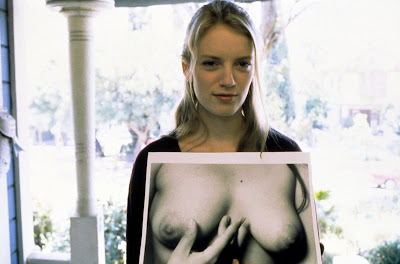 The Dawn of the Dead star was joined by actress Wendy Crewson (Air Force One, 24) and president of the Writers Guild of Canada Rebecca Schechter. "What these guidelines will do is force writers to self-censor - to guess and second guess before you even start writing how much violence might be considered excessive or gratuitous or how much sexuality in your stories is educational enough to pass," Schechter said. For example, there might be too much violence to write a script about Alberta's Mayerthorpe tragedy, when four Mounties were murdered by James Roszko in March 2005, said Ms. Schechter.
Shows like Little Mosque on the Prairie and Trailer Park Boys are most at risk if the federal government follows through on Bill C-10, said a member of the delegation protesting the bill at a Senate committee. "It's a homogenization of the nature of productions; you will see more productions about kittens, puppies, bunnies and cute little kids," says Brian Anthony, CEO of the Directors Guild of Canada. Anthony added the move will damage an already ailing industry. The soaring loonie has kept many American productions down south, and the recent writers' strike had a profound effect in B.C., where many U.S. programmes are filmed.
Ms. Schechter is concerned the bill will give the government sweeping powers to decide what content is deemed unacceptable for Canadians. Polley echoed Schechter, worried that the bill would kill typically edgy Canadian films. A further blow, reiterated Ms. Polley, is that this "morality hammer" only applies to Canadian film and television programmes, while Hollywood can still apply for tax credits.
At present, artists apply for a bank loan for their production and only get a government credit when the finished product meets Canadian content rules. Heritage Minister Josee Verner disagrees that the proposed change to a federal tax credit system jeopardizes the creative freedom of Canadian film and television production. She has said that the bill is far from censorship, arguing that the bill aims to make sure Canadian taxpayers' money won't fund extreme violence, child pornography or other such things.
Meanwhile, one of the very productions Bill C-10 seems designed to curb will probably get a private viewing by members of the Senate. Some senators have been in touch with the producers of the Canadian relationship comedy Young People Fucking, arriving in theatres in mid-June, and have asked to see the film as they consider Bill C-10.
"They're all trying to educate themselves and they have asked to see the movie. We are talking about setting up a screening for them," said Steve Hobas, whose Toronto-based Copper Heart Entertainment made Young People Fucking.
The film has been a lightning rod in the C-10 debate, with right-wing organizations like the Canada Family Action Coalition arguing it should never have received a dime of government money. The tax credits granted to the film amounted to about 5 per cent of its overall budget, Hobas said.
Further reading: Misinformed meets misguided
"I wouldn't have a career if it wasn't for public money," said Ms. Polley, who was nominated for two Academy Awards this year for her directorial film debut Away From Her. Ms. Polley told reporters at a news conference on Parliament Hill Thursday that Canadian writers, actors and film and television directors will be forced to leave the country if the Conservative government pushes Bill C-10 through.
The bill would allow the government to refuse tax credits to films and television shows considered offensive. "Any whiff of censorship is chilling for us," said Ms. Polley. "The bill attacks the very heart of Canadian programming. It is against freedom of speech and everything we stand for," she said. "Canadians won't be able to see the Canadian programmes they love"... or her photocopied flop-a-tee-flops for that matter.
 The Dawn of the Dead star was joined by actress Wendy Crewson (Air Force One, 24) and president of the Writers Guild of Canada Rebecca Schechter. "What these guidelines will do is force writers to self-censor - to guess and second guess before you even start writing how much violence might be considered excessive or gratuitous or how much sexuality in your stories is educational enough to pass," Schechter said. For example, there might be too much violence to write a script about Alberta's Mayerthorpe tragedy, when four Mounties were murdered by James Roszko in March 2005, said Ms. Schechter.
Shows like Little Mosque on the Prairie and Trailer Park Boys are most at risk if the federal government follows through on Bill C-10, said a member of the delegation protesting the bill at a Senate committee. "It's a homogenization of the nature of productions; you will see more productions about kittens, puppies, bunnies and cute little kids," says Brian Anthony, CEO of the Directors Guild of Canada. Anthony added the move will damage an already ailing industry. The soaring loonie has kept many American productions down south, and the recent writers' strike had a profound effect in B.C., where many U.S. programmes are filmed.
Ms. Schechter is concerned the bill will give the government sweeping powers to decide what content is deemed unacceptable for Canadians. Polley echoed Schechter, worried that the bill would kill typically edgy Canadian films. A further blow, reiterated Ms. Polley, is that this "morality hammer" only applies to Canadian film and television programmes, while Hollywood can still apply for tax credits.
At present, artists apply for a bank loan for their production and only get a government credit when the finished product meets Canadian content rules. Heritage Minister Josee Verner disagrees that the proposed change to a federal tax credit system jeopardizes the creative freedom of Canadian film and television production. She has said that the bill is far from censorship, arguing that the bill aims to make sure Canadian taxpayers' money won't fund extreme violence, child pornography or other such things.
Meanwhile, one of the very productions Bill C-10 seems designed to curb will probably get a private viewing by members of the Senate. Some senators have been in touch with the producers of the Canadian relationship comedy Young People Fucking, arriving in theatres in mid-June, and have asked to see the film as they consider Bill C-10.
"They're all trying to educate themselves and they have asked to see the movie. We are talking about setting up a screening for them," said Steve Hobas, whose Toronto-based Copper Heart Entertainment made Young People Fucking.
The film has been a lightning rod in the C-10 debate, with right-wing organizations like the Canada Family Action Coalition arguing it should never have received a dime of government money. The tax credits granted to the film amounted to about 5 per cent of its overall budget, Hobas said.
Further reading: Misinformed meets misguided
TV 'sweatshops' under-fire
The Writers Guild of America failed to win concessions for reality TV workers during its recent strike, but that doesn't mean it has given up the fight. Tuesday's news that a dozen former workers on major U.S. reality shows like American Idol had filed state labour complaints shows the campaign to end what many describe as sweatshop conditions on these programs is a going concern. The claims lodged with the California Division of Labor Standards Enforcement seek $500,000 in unpaid overtime and penalties.
The Writers Guild has sought since 2005 to organize reality show workers. And two class-action lawsuits filed that year accused several major networks and production companies of violating California labour laws governing overtime wages and meal breaks.
Those suits, which are still pending, also accused producers of coercing workers to falsify time cards.
Justin Buckles, 28, a former production assistant and production co-ordinator on American Idol, said he routinely put in 12 to 20 hours a day, seven days a week without lunch breaks during his a three-year stint on the show. When he approached his boss seeking a raise or overtime compensation, he was threatened with dismissal, he said. "I was told I was completely replaceable, and that if I decided to speak out I would be blacklisted and would not be able to work in the industry again," he told Reuters. Buckles said he last worked on Idol in 2006 and now runs his own Web-based venture. A spokesperson for Idol production company FremantleMedia declined to comment.
American Idol, which airs on the Fox network, ranks as U.S. television's most-watched show, averaging nearly 30 million viewers a week in the States and about 2.3 million in Canada. Buckles is one of 12 former workers from various reality shows, including Are You Smarter Than a 5th Grader?, The Amazing Race and American Inventor, who filed claims seeking roughly $500,000 in back pay for overtime and meal break penalties collectively, WGA spokesperson Gregg Mitchell said.
The WGA sought to gain union jurisdiction over reality shows in its latest round of contract negotiations but dropped that demand in order to reach a settlement of its 100-day strike against major studios. Industry executives deny those workers act as writers because they do not, for the most part, pen conventional scripts or dialogue.
But the union says they serve as the functional equivalent of writers by working to create dramatic tension – and the artifice of spontaneity – by helping to stage interactions of contestants and editing hundreds of hours of tape into coherent, compelling story lines. Meanwhile, the host, celebrity judges and even some of the amateur talent on such shows as American Idol get union wages and benefits as members of the American Federation of Television and Radio Artists.
Tina Fey is ready to rock
The sexy satirist returns to TV, silver screen and magazine stands – declare April her month states Rob Salem...
Tina Fey. "TinaFey" ... you somehow can't keep yourself from stringing the name together, like Tracy Morgan always used to on Saturday Night Live – before he started calling her "LizLemon" on 30 Rock. TinaFey, now less a name than an established brand, with the comedy quality seal of approval. TinaFey, creator, producer, head writer, screenwriter, sitcom and now movie star ... one-stop shopping for all your humour needs.
Snarky, sassy, cynical, smart and, yes, sexy – just check out that recent cover of Vanity Fair – even behind those clunky nerd glasses and that intriguing little hint of a scar on her chin (a childhood accident she declines to discuss because it "bums out" her parents).
Fey, television's uncontested "it" girl at the age of 37, who will essentially own the month of April with tonight's return of her sitcom hit, 30 Rock (8:30 on NBC and A-Channel) and the April 25 opening of her new film, Baby Mama, which she wrote as a vehicle for herself and her Weekend Update co-anchor, Amy Poehler.
From Fey's perspective, she's just glad to be back at work. As one of the few legitimate hyphenates in the business, the recent writers' strike split her loyalties: to her show, her staff and, as a relatively new mom, to her 3-year-old daughter, Alice Zenobia Richmond (with husband Jeff Richmond, an SNL composer she met in 1994 at Chicago's Second City).
"I did my union duty on the picket line," she says, addressing the press in a telephone conference call. "But mostly I stayed at home with my daughter, which was sort of the only blessing of the strike. For me, it was a little bit like a maternity leave that I did not previously have. It's tough now, because my daughter is old enough to say, `No, you not go to work. You not go outside.' That's hard for any working parent."
Occasionally, she says, she'll bring Alice with her to work. "I do try to bring her sometimes and she likes to come. She likes to hang out in the makeup room. But at the same time, it is a busy workplace and I always feel mindful that not everyone gets to bring their kids. "Actually, at 30 Rock, we do try to do special days where we have parties where everyone can bring their kids. We had a really fun Halloween party and a sort of a spring/Easter party (last month)."
But then, 30 Rock has always been something of a family affair, from favoured SNL host Alec Baldwin – and there is no one better at hilariously underplaying Fey's consistently clever dialogue – to her old comedy comrades from New York and Chicago. "A lot of these parts who are regulars, I wrote with people in mind," she says. "For example, Jack McBrayer, who plays Kenneth, is an old friend of mine from Chicago. I really wanted him for that part and was very happy when no one objected. Scott Adsit is an old friend of mine. I wrote that part (writer Pete Hornberger) with him in mind. And we wrote Jack (Donaghy) with Alec in mind, too ... and were very pleasantly surprised when he agreed to do it. We've used a lot of people from Chicago. We've used Brian Stack some and he's going to come back – he was a Second City guy. And Miriam Tolan, Brian McCann ... it's like, every time we have a small role, I'm going through my mental Rolodex of the Upright Citizens Brigade in New York or the Second City and ImprovOlympic in Chicago, just to see who we haven't used yet."
Born Elizabeth Stamatina Fey in the Philadelphia suburb of Upper Darby, she developed an early interest in TV comedy, inspired, in large part, by Catherine O'Hara's work on SCTV. "I also grew up on a lot of classic TV," she says. "Mary Tyler Moore, Bob Newhart, Carol Burnett ... all that kind of stuff." Earning a BA in drama at the University of Virginia, Fey immediately relocated to Chicago to study improv at Second City, joining the mainstage cast there in 1994.
In 1997, she landed a job as a writer for SNL. Just two years later, she was made head writer, the first woman ever to do so – and, at 5-foot-4, also the shortest. During her nine-year SNL tenure, she only rarely appeared in sketches, aside from co-anchoring the weekly news parody. As recently as her guest-host monologue last month, she admitted to still thinking of herself more as a writer than a performer.
Which, in the early days of 30 Rock, was made fairly evident by her apparent unease and a certain awkward stiffness in the delivery of her own dialogue.
Now, I suggest as diplomatically as possible, she seems much more comfortable in front of the camera. "I think you might be right," she allows. "I am having a very good time shooting these episodes now. It feels like the pressure is off. I feel so grateful to have been recognized for the stuff that I did on the show last year, that maybe that has helped me relax a little bit. I've really fully stopped apologizing for being in the show."
And now that she's back on the job – or rather, jobs?
Real-life experience fuels Office performance
 Rainn Wilson, who plays the seriously deranged office drone Dwight Schrute, is only too happy to be back at his office desk in The Office. Seriously.
It reminds him, he says, of his days as a "starving actor" -- talk about central casting -- when he worked as an "assistant office manager and special events coordinator" for a New York charity he refuses to name. That's assistant-to-the-office-manager, now, and not assistant office manager. "Got it?" Wilson said, sounding very Dwight-like during a conference call with reporters. "And then I was a receptionist in the Pam Beesly mould at Kirshenbaum, Bond & Partners, an advertising agency in New York," he added sadly. "I was Pam."
Rainn Wilson, real-life office temp, behaved more like Jim Halpert, the playful anarchist played by John Krasinski in The Office, than he did Dwight, Wilson confesses. "My heart really wasn't in it," Wilson said, "which is like Jim. Also, I was very capable, which is also like Jim. Jim is very capable. But I don't think they missed me."
Wilson has such a droll, deadpan delivery, it's hard to tell when he's being ironic. He says he killed as a waiter, for example, in his salad days -- figuratively, one assumes, if not literally. "I was an excellent waiter," Wilson said. "I could have really gone somewhere as a waiter."
The Office returns Thursday in the first new episode since the writers' strike ended. In the episode, Jim (Krasinski) and Pam (Jenna Fischer) force themselves to go to office manager Michael Scott (Steve Carell) and Jan's (Melora Hardin) house for dinner after they find they've run out of excuses. The set-up doesn't seem to involve Dwight, based on a bare-bones reading, but Wilson cautions not to read too much into a simple, one-line story description. "You'll have to tune in to find out," he said. "It's amazing what happens. It's going to rock your world."
Again, it's hard to tell if he's being ironic. One thing is certain: The Office spin-off show, now confirmed for midseason, will not focus on Dwight Schrute, as had been previously reported in some circles. According to NBC, the as yet unnamed Office spin-off will feature "new faces and new locations."
On a subliminal level, Wilson admits being a little disappointed. He envisioned Dwight as the star of his own reality show. "Not a comedy or sitcom but a reality show. About a beet farmer. Kind of like Ax Men -- this new reality show about lumberjacks. You could just watch a beet farmer all day."
He works all day and sleeps all night.
"Right. Exactly."
Ax Men is a real program, by the way. It airs on the U.S. History Channel, and is billed as "the first ever non-fiction series about the treacherous life of Pacific Northwest timber cutters."
Wilson says it was refreshing at first to get back to the daily work routine on The Office after the strike. That euphoria wore off after a few days, though. Working in The Office is a little like working in a real office. "We all go a little bit mad about eight hours into sitting under those fluorescent lights," Wilson said. "You find yourself spending all your down time surfing the Web, and there are only so many times you can check CNN.com to see if a bomb has gone off somewhere. You start to go a little stir crazy after a while, and things start to get out of hand. Recently we've kept ourselves entertained by doing Brian Baumgartner imitations, and coaxing Ed Helms into doing all his impersonations."
Baumgartner plays sad-sack office drone Kevin Malone in The Office, while Helms, a recent employee transfer from The Daily Show with Jon Stewart, plays workaholic and type-A personality Andy Bernard. "Ed Helms does an incredible Tom Brokaw," Wilson said. "Here's my imitation of Ed Helms saying, 'albondigas' as Tom Brokaw -- al-bon-dee-gus soup."
The Office staff get along, Wilson says. Seriously. "It's a huge love fest. I know that doesn't make for a great story. It doesn't make for great print journalism, but when we got back to work, it was like a family reunion -- with our other family. It was great to see everyone again. The batteries were definitely recharged."
Literally, and figuratively.
"It's just a wealth of riches," Wilson said, without a trace of irony. "The writing is so good and so funny. There are many times I go in and I can't imagine even changing a word. And yet I do."
The Office returns Thursday on Global and NBC at 9 p.m.
'I don't talk the way she does'
Former gangland wife Roberta Williams says she was moved to tears by the portrayal of her good friend, hitman Andrew Veniamin, in the controversial Nine series Underbelly. But the former wife of jailed gangster Carl Williams has little else positive to add about the controversial drama, saying it's so off the mark it's a comedy.
Williams told Sydney radio station 2Day FM she thought Damian Walshe-Howling gave an excellent performance as Veniamin. "The guy who plays Andrew ... he actually played him well," she told 2Day FM. "There were some parts in it where I had a little cry because he reminded me of him and we were really good friends and very, very close." She added that she felt like her "whole world crushed down on me" when Veniamin was killed.
Williams said she was initially furious when she heard the series was being made, but has since decided to treat it as a piece of humorous fiction. "I got into it and thought, this is a comedy, not reality, it's humorous," she said.

Williams has been very vocal in her criticism of actress Kat Stewart's portrayal of her. "I certainly don't talk the way she does," Williams said. "I sound like some real Aussie chick who comes from the slums of god knows where. Sometimes, yes, I swear, I yell and scream like the police would've heard on lots of listening devices in our home, but I don't conduct myself in the manner they're portraying on the show."
Williams also said she was more prudish than Underbelly made her appear and had never taken the drug ecstasy. "I'm not one of these chicks who spasmodically has sex wherever it's desired like they portray me on the show," she said. "I'm a bit of a nerd when it comes to things like that."
Williams, who speaks to her ex-husband most days, said she never really feared for her life during the time of the gangland killings. "I fear more that my children are going to be run over standing on the side of the road than being killed in the, as they call it, Melbourne gangland war," she said.
Her main concern these days is finding somewhere to live. The ex-wife of Melbourne's most notorious gangland killer revealed she was having trouble getting a rental property in her name. "My name, I don't know whether they think a house full of gangsters coming over or whatever it may be that narrow minded people think in their stupid little worlds," she said. "It's been an emotional rollercoaster, there are days where I smile and laugh and I guess people don't see me at night crying about what life was and what's ahead of me."
Further reading: full transcript of the interview between Roberta Williams - wife of jailed drug lord and killer Carl Williams - and the 2Day FM hosts Kyle Sandilands and Jackie O.
Garraway wins libel damages over affair claim
The GMTV presenter Kate Garraway accepted substantial libel damages today over false allegations that she had an affair with her Strictly Come Dancing partner, Anton Du Beke.
The TV host, who is married to the former Labour adviser turned psychotherapist Derek Draper, will receive an undisclosed six-figure sum from tabloids the Sunday Mirror and Daily Mirror. Her solicitor, Rachel Atkins, told Mr Justice Eady at the High Court in London that the newspapers’ publishers, MGN Ltd, now accepted that there was "no truth whatsoever" in the claims printed in February of this year and apologised.
Ms Garraway, 39, who was in court with her husband, said that she was pleased the truth had now been made public. "I am glad that this matter is now over. No one likes to take legal action against a newspaper but I could see no alternative. The way my friendship with Anton was twisted into something sordid was terribly unfair and upsetting. I wanted everyone to know that what had been written was completely wrong. The accusations threatened to cast a shadow over the wonderful time I had on Strictly Come Dancing, but now I can feel good about it all again."
 Mr Draper described the months since the articles were published as "stressful" and defended his wife's right to maintain a friendship with Mr Du Beke: "This has been a stressful time but we felt we had to fight for a complete apology and damages because this story was so entirely false and therefore deeply upsetting. It is horrid to attack a couple's marriage in this way just because they have a public profile. I have always been glad that Kate and Anton became such good friends and felt sick when that was distorted into something else entirely. Women — and men — should be allowed to be friends with people of the opposite sex without people leaping to the completely wrong conclusion."
In court, the couple's solicitor said the pair, who have a two-year-old daughter, "are and were as faithful, happy and in love at the time of the publication as they had ever been".
"The plain truth was that the claimant and Anton Du Beke became friends during Strictly Come Dancing. Since then they had often worked and spent time together. Given that the defendant had ignored the claimant's denials prior to and at the time of publication, the claimant felt she had no option but to immediately issue proceedings for defamation."
Ms Atkins said that the Sunday Mirror article was accompanied by several pictures of Ms Garraway going about her normal daily life which were presented in such a way that they purported to back up the allegations. These were taken without her knowledge and did not support an allegation of an illicit affair. The Daily Mirror article, the following day, was entitled "Strictly No Crisis . . . GMTV's Kate show of unity after kiss with dancer star" — from which readers might have concluded that she was reduced to putting forward a hopelessly unconvincing and false denial of her affair.
MGN's counsel, Elizabeth Prochaska, said that while it did not intend expressly to state that Ms Garraway was having an affair with Mr Du Beke, nor that her denials of such an allegation were unconvincing, it now accepted that the articles implied that. "Through me, the defendant offers its apologies to the claimant for the distress and embarrassment caused by these articles. The defendant accepts that any suggestion that the claimant betrayed her husband, Derek Draper, and was unfaithful to him by having an affair with Anton Du Beke is false and undertakes never to repeat such an allegation."
Adult TV to lose its allure

Television channels that feature scantily clad women enticing viewers to call premium-rate phone lines will be forced out of business if new rules from Ofcom work as planned.
The communications regulator wants to crack down on the 17 “babe TV” channels, which can be found, free to watch, on the outer reaches of cable and satellite services (so I'm told). It is part of an exercise to control television phone-ins, which were hit by a series of scandals last year. As mainstream broadcasters have already cut back on phone-ins, its principal impact is on unconventional broadcasters and channels such as Babe-station and Babeworld TV.
The new rules state that phone-ins can be used in programmes only whose “primary purpose is editorial”, such as Big Brother. The “babe” channels, which transmit only phone-line advertisements, can continue only if they opt to be governed by similar rules as home-shopping channels. This means they will be allowed to remain on air only if viewers have to enter a PIN to access the channel.
The European Court of Justice ruled in October that a television quiz show could be classed as teleshopping.
BBC iPlayer risks overloading the internet
The success of the BBC's iPlayer is putting the internet under severe strain and threatening to bring the network to a halt, internet service providers claimed yesterday. They want the corporation to share the cost of upgrading the network — estimated at £831 million — to cope with the increased workload. Viewers are now watching more than one million BBC programmes online each week.
The BBC said yesterday that its iPlayer service, an archive of programmes shown over the previous seven days, was accounting for between 3 and 5 per cent of all internet traffic in Britain, with the first episode of The Apprentice watched more than 100,000 times via a computer. At the same time, the corporation is trying to increase the scope of the service. It is making its iPlayer service available via the Nintendo Wii, allowing owners who are unable to stop playing in time for their favourite programmes to catch up with them later.
Tiscali, the internet service provider, said that the BBC and other broadcasters should “share the costs” of increasing internet capacity to prevent the network coming under strain. Ashley Highfield, the BBC's director of future media and technology, said: “We are having an impact, but we don't believe it is a great one - and it would be a unique way of using licence fee-payers' money to help internet service providers with their business model.”
However, a spokesman for Tiscali said that the BBC was deliberately underplaying the problem, arguing that internet providers had to “overbuild capacity in our networks” because they could predict how many people would want to watch television via the internet. “This cost would then be passed on to our customers — in effect a BBC tax levied on top of the licence fee,” the company added. The problem for Tiscali, though, is that its concerns are not widely shared in the industry. BT, which provides a key part of the UK's internet infrastructure, said that the problem, “while real”, could be solved. It said that the key was not speeding up connections to people's homes, but through improvements in “backhaul and core networks” — the links that operate up and down the country.
The iPlayer service has rapidly become a hit after it was introduced at Christmas, even though it involves either watching a programme on a computer screen or finding a way to link the computer to the television. There were 17.2 million requests to watch programmes last month, an increase of 25 per cent on February.
The Nintendo Wii tie-up means that all BBC programmes transmitted over the last seven days will be available to 2.5 million homes with a Wii —- but similar tie-ups with Sony, maker of the PlayStation, and Microsoft, maker of the XBox 360, appear unlikely. It is already possible to watch BBC programmes transmitted in the past week to a PC or Apple Mac, but the corporation was keen to work with Nintendo. Erik Huggers, group controller at the BBC's future media and technology division, said: “Nintendo has helped to reach a broader range of people with the Wii.”
Most watched:
1 The Apprentice - BBC One 26/03/2008
2 Louis Theroux: Behind Bars - BBC Two 13/01/2008
3 Ashes to Ashes - BBC One 07/02/2008
4 Torchwood - BBC Three 21/03/2008
5 Dawn . . . Gets Naked - BBC Three 14/02/2008
6 Torchwood - BBC Two 16/01/2008
7 Doctor Who: Voyage of the Damned - BBC One 25/12/2007
8 Torchwood - BBC Three 20/02/2008
9 Gavin and Stacey - BBC Three 23/03/2008
10 Dawn . . . Goes Lesbian - BBC Three 21/02/2008
Further reading: BBC iPlayer targeted by hackers; Internet TV slow to catch on despite BBC iPlayer
US switches off anchorwoman who broke mould
An expensive experiment to have a woman anchor a network television newscast in America seems set to end in failure. Katie Couric, 51, once the nation's favourite breakfast TV presenter, was appointed as the $15million-a-year anchorwoman of CBS Evening News in 2006 in an attempt to appeal to a wider audience. Although a woman had co-presented the evening news before, she was the first to be sole anchor for one of the three traditional networks.
Despite the fanfare, the revamp faltered and Ms Couric's show still languishes in a distant third place in the ratings behind the two rival newscasts presented by men. CBS Evening News was watched by 5.9 million viewers in the week ending March 31, compared with 8.3 million for NBC's Nightly News with Brian Williams and 8 million for ABC's World News with Charles Gibson. Ms Couric and CBS are said to be preparing to part company halfway through her five-year contract. The Wall Street Journal said that Ms Couric could leave after the inauguration of the new US president in January.
When she took over, Ms Couric experimented with a chatty approach and longer interviews, sometimes conducted beside a fireplace. The initial curiosity attracted audiences of more than ten million for the first few days but her ratings slumped below those of her male predecessor, Bob Schieffer, who filled in when the long-time anchor Dan Rather was forced out over a discredited report on President Bush's service in the National Guard.
Ms Couric lamented that the staid news format prevented her bubbly personality from coming through. Viewers used to seeing her do cooking demonstrations and banter about celebrities on the top-rated NBC show Today found it hard to watch her present news of politics and war. “Suddenly when I was put in a format where it was not personality-driven at all — I think it was a bit of an adjustment for people,” she said at the National Press Club. “They're like: 'What happened to her? She used to be fun'.”
At times her frustration boiled over. Last year she admitted to slapping a news editor who put the word “sputum” — a word she detests — in a piece about tuberculosis. The audience for network news has been dwindling as Americans get more and more of their information from 24-hour cable TV and the internet. The total viewership of the NBC, ABC and CBS evening news shows fell 5 per cent last year to 23 million.
Both CBS and Ms Couric played down the news of an impending split. “We have no plans for any changes regarding Katie,” the network said. Ms Couric said that she was “working hard and having fun” on the show. However, she is reportedly being offered a syndicated talk show or a full-time role on CBS's flagship 60 Minutes news magazine. Speculation is rife that she could replace Larry King, the 74-year-old talk show host, on CNN.

Women in the news:
— Women first read the news on radio during the General Strike of 1926
— Angela Rippon, Britain’s first full-time female newsreader, made her first BBC broadcast in 1966
— When Kate Adie became chief news correspondent in 1991, only three of the BBC’s 25 war reporters were women
— Natasha Kaplinsky joined Five News last year for a reported £1 million a year. Six weeks later she announced that she was three months pregnant
— Palestine TV employs 15 women newsreaders. Recently they marched in protest at death threats
Further reading: CBS News, Katie Couric are likely to part ways
Mock not the afflicted
Last night's TV reviewed: Frankie Howerd: Rather You Than Me
Rather You Than Me (BBC4) was Frankie Howerd seen through the eyes of his longtime and long-suffering partner, Dennis Heymer, who survived to tell the tale. It was, inevitably, what Dennis felt, what Dennis did, and, fortunately, Dennis was played by the quite remarkable Rafe Spall. Dennis knew the things which stayed inside the family. From Howerd's sexually abusive father to his childish partiality for jelly and cream. From his attempt to cure his homosexuality with mindbending drugs to Bette Davis's advice to keep his wig on the teapot. ("It steams it. Keeps the contours.") No, poor soul. Mock not the afflicted. David Walliams was Howerd in every possible respect except, of course, he wasn't. The one thing that is lost in these re-creations is the laughter.
All right, so the clue was in the title, BBC4’s The Curse of Comedy season has been sadly bereft of humour, offering not so much rib-tickling as wrist-slashing recreations of the lives of some of the best-loved comic talents of TV’s golden age. Starting with Steptoe & Son’s Wilfred Brambell drinking himself to destruction over his repressed homosexuality, the series brought us, via a demonic Tony Hancock and last week’s monstrous Hughie Green, full circle last night to a Frankie Howerd who, like Brambell, spent most of his life strapped to the torture rack of self-loathing. Even by the standards of its predecessors Frankie Howerd: Rather You Than Me was a jaw-droppingly bleak portrait of one of the funniest men ever to appear on stage and screen.
And while we're at it; BBC Four might not be the most flush place, but in each of the Curse of Comedy season dramas so far – Steptoe, Hancock, Hughie Green – the thoroughly flush entertainers seem to be living in drudgery. It may well have been Britain in the 1950s and 1960s (a time of – horrors! – no Ikea or Skandium) but surely, being well-off, these celebrities lived in slightly more extravagant surroundings than the dingy semis that keep cropping up in these dramas.
Other flaws in Frankie Howerd: Rather You Than Me were more glaring. David Walliams never really picked up Howerd’s character by the scruff of its neck, neither mimicking it well nor creating something distinctive. The tics weren’t quite outrageous enough, the swoop of those “Ooooh” and “ahhhs” not full-bodied, the lip pursing and rolling eyes were in abeyance. It was also hard to follow and decipher: the drama was apparently set in a fallow period of Howerd’s career after (presumably) success, but this wasn’t made clear. He just seemed a bit hopeless and pathetic, and then Peter Cook jumped in right at the end to save his career.
The suggested root of Howerd’s misery and self-loathing was his homosexuality, which he seemed utterly ashamed of; and the drama sought to illuminate that alongside his relationship with Dennis Heymer. Rafe Spall played Heymer beautifully: puppy-dog devotion and iron belief mixed with frustration and anger at how Howerd kowtowed to his demons. Seen through Heymer’s eyes, the comedian’s anxieties were wholly due to his contradictory nature: a man of notorious promiscuity, yet who could never reconcile himself to the fact that he was gay. Heymer was the loyal lover who recognised the comedian’s need for “someone to look after him” and stood steadfast despite the indignities heaped upon him. At another level, though, it dealt with the possibility that Heymer’s presence in Howerd’s life was the very thing that knocked him off kilter – because of his inescapable urge to deny it. As Howerd said to Heymer, albeit in jest: “I was perfectly all right until I met you.”
But their drama didn’t go anywhere. It was still, listless. A performance Howerd gave at the Oxford Union in 1990 book-ended events. But Walliams didn’t set the stage alight there, the jokes weren’t very good, the innuendo fizzed as flat as month-old Coke. The same at the restaurant table where Howerd first bewitched Dennis, then a waiter, in the 1950s: the expressions of the diners were mesmerised but at what? Howerd just seemed a mumbling fool. The writing was more confident when tracking the tricky terrain of the men’s relationship: Howerd hated his body (and called his penis, “parsnip”). The sex he had with Heymer was “dirty”. All his partner could say was “I love you”, but Howerd’s terror at being outed in the press overrode any endearments: “You’ll have to make yourself scarce in the morning.”
Howerd revealed his father had abused him, but this didn’t explain away all his demons or give the drama much added weight. The best scene was a rare moment of happiness and it wasn’t his, but Heymer’s as he finally had guilt-free sex with another man. Howerd went to a doctor who gave him LSD as some kind of aversion therapy. Howerd and Heymer’s relationship remained something of a pantomime to the end, Heymer still playing the chauffeur/agent/dogsbody in public. We didn’t know about the Howerd before the painful period, or the Howerd after, although at the end he seemed more relaxed, clasping his lover’s hand with affection. But it was all as insubstantial and threadbare as the furniture: the real Frankie Howerd escaped detection with nothing more than an arch “Oooh missus”.
The film itself focused chiefly on one of the lowest ebbs of Howerd’s life when, having enjoyed enormous fame in the late 1940s and early 1950s, stage fright and near-nervous breakdown almost scuppered his career. He bounced back in That Was the Week That Was on the trampoline of a Johnny Speight script, like Tosca reappearing above the battlements. "And now," said David Frost soberly, "The Week in Westminster, and our lobby correspondent is Mr Frankie Howerd." As I remember it, the subject was Macmillan's budget. Howerd's face, the greatest thing since sliced bread, fell into assorted slices. "Ooh," he confided subversively to the achingly smart young audience, "I blame Dot. I do! Dot." Dot was Lady Dorothy Macmillan. They fell about in their millions. It was the first time we had realised that a prime minster's partner is always funny and vulnerable.
Unfortunately the relentless dreariness of the last night's script, combined with an underwhelming performance by Walliams, meant we always stopped just short of seeing the real Howerd, the one with the spark of comic genius. As such, while not unsympathetic, Howerd emerged so devoid of charisma it was impossible to believe he’d ever made anybody, let alone countless millions, split their sides. Maybe that was the point. It is accepted wisdom that Howerd was not witty in himself, and he says here, "I'm useless if I haven't got a script."
Wednesday, 9 April 2008
Myers to host MTV Movie Awards
Mike Myers, the funny man star of the Austin Powers comedies, is set to host the irreverent MTV Movie Awards this June, MTV said on Wednesday.
The show annually pokes fun at straightforward Hollywood awards like the Oscars by honouring actors and actresses in categories such as "best kiss" and "best villain," and it has become widely-watched for its humour and star power.
"Hosting the MTV Movie Awards is like a party, but without having to do beer runs in your mom's mini-van," Myers said in a statement. "We do beer runs in Will Smith's four-story motorhome."
Myers, who stars in summer comedy The Love Guru, has hosted the MTV movie awards previously. Nominees will be unveiled in May, and the show will air on June 1.
BBC reprimanded over Live Earth swearing
The BBC has been ordered to broadcast a statement admitting it failed its viewers, after Ofcom delivered a damning verdict of its Live Earth coverage.
The media watchdog criticised the corporation’s “serious and repeated” breaches of broadcasting regulations after it screened Madonna, Chris Rock, Phil Collins and Razorlight singer Johnny Borrell swearing at the July 7, 2007 environmental awareness event.
The word “fuck” was used on six different occasions, with Madonna shouting to the audience assembled at London’s Wembley Stadium: "Come on, motherfuckers! Jump!" Offensive language was screened on BBC One and BBC Two before the watershed, prompting 22 viewers to complain.
Publishing its findings today, Ofcom made the rare move of ordering the corporation to broadcast a statement of its findings on both BBC One and BBC Two at a time specified by the regulator. Ofcom was scathing of the BBC, stating that the corporation had been warned after stars swore during the similar Live8 fund-raising event in 2005, but had “failed to deploy effective and appropriate procedures to prevent the broadcast of the most offensive language”. The regulator noted that the BBC breached language rules on a Saturday afternoon when children were likely to be in the audience.
In its defence, the BBC argued that it had briefed artists whom it regarded as “potentially problematic” in an attempt to avoid broadcasting inappropriate material. The corporation also said it couldn't use a time delay as the event was billed as live, and that it had issued on-air apologies following some of the breaches.
Ofcom pointed out a short time delay could have been employed and that some of the BBC’s apologies for bad language came only after considerable delays. Last year, the BBC was fined £50,000 after children’s programme Blue Peter was found to have faked competition results.
Exploring the two sides of a straight edge
"Straight edge" teens should be a godsend for anxious parents and vigilant police officers everywhere. Young people in the movement choose to abstain from alcohol, tobacco products, and drugs, and to resist peer pressure. But a more radical and violent side of the movement is changing the definition of what it means to be straight edge, reports Monica Boland
Inside Straight Edge, a powerful hour-long documentary airing tonight on the National Geographic Channel, explores the two faces of this growing youth culture: positive, tight-knit communities that try to set an example through abstinence; and more militant, fanatical groups that use their intense focus on wiping out substance abuse as justification for violence.
Sonic Youth frontman Thurston Moore narrates the documentary. His presence may help the filmmakers attract an audience interested in a youth movement that's becoming more prevalent - and harder to define. The term "straight edge" was first used in 1981 by the punk band Minor Threat. Their 45-second song Straight Edge, famous for the line, "I've got the straight edge," unintentionally sparked the beginning of a movement focused on self-control and protest.
The images associated with straight edge are punk rockers with Mohawks, hardcore kids with tattoos covering their arms and legs, and skaters with X's written on their hands. The message of abstinence is spread at high-energy concerts, where teens bond over their commitment and release pent-up energy and frustration from the pressures of being young. Straight edge has grown exponentially over the past few decades and has even become something of the norm in certain towns and cities across the country. Inside Straight Edge looks at three cities where the movement is substantial: Boston, Salt Lake City, and Reno.
Director Shadrack Smith's focus on these cities might seem limiting, but he includes wide-ranging interviews with teens committed to the movement for a host of different reasons, as well as police officers and parents. Some teens, such as Pat Crane of Massachusetts and Nevada native Zeke Bilyeu, contend they are scapegoated because of violence committed by others who have very different definitions of straight edge. Bilyeu, along with members of the straight edge band Armed for Battle, take issue with a journalistic characterization of them as "white suburban terrorists." Yet they do make clear that if antagonized, they will defend themselves and members of their community.
According to the film, law enforcement officials in Salt Lake City and Reno, where acts of straight-edge violence are common, now consider anyone affiliated with straight edge to be potentially dangerous. As a result of violence against drug dealers and users on Lansdowne Street in Boston by aggressive straight edgers and the murder of a 15-year-old in Salt Lake City, police officers in those two cities now classify the movement as a gang.
Near the end of the documentary, an eighth grader from suburban Boston stares intensely at the camera while differentiating between the positive version of the straight edge community and the violent side. Asked about his future involvement, he says, "We're not going to go out and kill people, but I'm not going to tolerate drugs around me and the ones that I love."
It's an answer that ends Inside Straight Edge on a suitably unsettling note.
Candidates giving back to gain votes
For the first time in any of their respective campaigns, presidential hopefuls Hillary Clinton, Barack Obama and John McCain are all uniting for one cause: American Idol. The three wanna-be Commander-in-Chiefs will each make an appearance on tomorrow night's Idol Gives Back special that aims to raise funds to benefit various U.S. and international charities.
Embracing pop culture trends in an attempt to amass additional votes is nothing new to this group of candidates: McCain has used the endorsement of The Hills star Heidi Montag as a way of seeming more in touch with the nation's youth while Obama has shaken his booty on The Ellen DeGeneres Show and Clinton lampooned herself on Saturday Night Live.
The three Senators will be joined by a cavalcade of celebrities who are all aiming to surpass the $76 million that was raised by the Emmy Award winning special last year. Miley Cyrus performs her hit song "Broken Chains" while American Idol winner Carrie Underwood covers George Michael's "Praying for Time." But arguably the biggest star lending his wattage to the event is Brad Pitt whose sheer presence caused such an uproar in the studio, filming had to be halted while the crowd calmed down.
In fact, the guest list for Idol Gives Back (airing Wednesday, April 9 7:30-10:00 PM ET/PT on FOX) reads like a who's who of Hollywood. Also making appearances on the special are Victoria and David Beckham, Jim Carrey, Adam Sandler, Alicia Keys, Reese Witherspoon, Julianne Moore, The Jonas Brothers, Felicity Huffman, Toby Keith, Whoopi Goldberg, Amy Adams, Bono, Celine Dion, Eli and Peyton Manning, Fergie, Forest Whitaker, Jennifer Connolly, John Legend, Mariah Carey and Robin Williams.
Idol Gives Back, will be so long that large portions had to be taped Sunday night for insertion into tomorrow's otherwise live show. Many of the biggest names on its star-studded roster - including Snoop Dogg, Miley Cyrus and Carrie Underwood - elected to perform on tape before an invited audience rather than appear live on the 21/2-hour special.
According to spy-witnesses who were in attendance Sunday night at Los Angeles' Kodak theater, the Gives Back charity show opens with the dancers who won So You Think You Can Dance, (a Fox show also created by Idol producers), followed by an appearance by the wife of California Gov. Arnold Schwarzenegger, Maria Shriver, who asked viewers to volunteer their time and services to their communities. (Jimmy Kimmel told the audience that "Simon Cowell is the reason Governor Schwarzenegger must work to secure the borders of this country.")
Underwood performed a George Michael song called "Praying for Time" and Cyrus - arguably the biggest draw in pop music in the world right now - sang one of her standards that seemed appropriate, "Broken Chains." Brad Pitt may have been happy he came on a night when they were videotaping. It seems his microphone was on the blink through at least part of his charity pitch - so they re-recorded, according to reports.
Meanwhile, Cowell was in the South Bronx last Friday, taping a visit to a family who are regular patients at mobile health clinics paid for by The Children's Health Fund. His segment will air along with other pre-taped messages from the presidential hopefuls. Other videos were submitted for the show from U2 frontman Bono, Forrest Whitaker, Jennifer Connolly, Celine Dion, Kobe Bryant, Julianne Moore, Kiefer Sutherland, Dolly Parton and even Ellen DeGeneres (who was supposed to host the show).
Idol host Ryan Seacrest reportedly signed over his paycheck for the night to the charity benefit, according to People magazine.
Oscar winner and the Eliot scandal
The Eliot Spitzer hooker scandal is getting the documentary treatment. And from an Oscar winner, no less. Filmmaker Alex Gibney, who won a 2007 Academy Award for Taxi to the Dark Side, is talking to distributors and financiers about his planned documentary on Spitzer, the ex-New York governor forced to resign in disgrace after being identified as a patron ("Client #9") of a prostitution ring under investigation by the feds.
Gibney, who's in France at the mipdoc festival - an industry showcase for documentaries - is shopping what's described as a "feature-length" documentary about "a recent, high-profile sex scandal." According to c21media.net, which broke the story, the "high-profile sex scandal" is believed to be the Spitzer saga. It's unknown, at this point, who Gibney has corralled for the documentary, or what, if any, cooperation he'll get from the primary players in the sordid tale.
Gibney's production company, Jigsaw Productions, is based in Manhattan. He received an Oscar nomination for his 2005 documentary, Enron: The Smartest Guys in the Room and he's also done docs on Henry Kissinger and Jimi Hendrix. Taxi to the Dark Side told the story of a cab driver in Afghanistan, and his controversial death at the hands of US soldiers while being held in detention.
Gibney has so far declined to comment.
A crippling shyness turned septic
Last night's TV reviewed: Massacre at Virginia Tech; Chinese School
The This World documentary Massacre at Virginia Tech (BBC Two) closed in silence with photographs of faces. There were 32 of them, so the sequence took an uncomfortable time. Behind each portrait lay a story with an end prematurely written by a tragically inadequate student called Cho Seung Hui who a year ago did the world a favour and finally turned the gun that had killed them on himself. The sequence felt like a rebuke to us for wanting to hear Cho's pathetic story and not those of his victims. But Cho would have been chuffed by the scrutiny Jonathan Hacker's otherwise excellent film awarded him. All he wanted was to be listened to.
Not that, during his lifetime, listening would have been easy: when he was 15, Cho was diagnosed with a medical condition known as selective mutism. This meant that he didn’t, possibly couldn’t, talk in certain social situations that he found intimidating. These included getting a haircut, hanging out with his room-mate and attending lessons; although all this was only really a restatement of its main symptom, his refusal to talk to people. When later he deigned to speak to his English professor, his conversation hardly flowed. She would ask a question and wait up to 20 seconds for an answer that, when it came, was delivered in a whisper. He said he was lonely and depressed and had no friends. The professor, a British writer named Lucinda Roy, noted astutely: “A lot of people thought Cho tried to evade attention. I felt he really wanted to be noticed in a way that was to me disturbing.” When his weirdness got him thrown out of the regular English class, Roy offered individual tuition and one of her books as a gift. She may not have got so very close, but she came nearer, one felt, than any psychiatrist had to saving him.
The documentary obviously wanted to know why he did it, but for a while it looked as if the question would be unanswerable. A fit of insanity was the first suggestion, one bolstered by a barmily delusional video he recorded and sent to NBC News before the attack. But the very fact that he had bothered to do so, and buy guns over a period of months, demonstrated that his murders were calmly premeditated. Another theory held that this was a crime of passion, revenge on a girlfriend who had rejected him. Not true either. So maybe this son of Korean immigrants was, as he claimed on the tape, attacking a community of decadent rich kids on behalf of his poor family. But his family was not poor and Virginia Tech's students were on state funding.
So what the hell had happened? The explanation was comical. Cho had discovered writing, changed his course from business information technology to English and embarked on a romantic novel. It was not good. In practice, this new passion spelled disaster. As Virginia Tech’s head of English put it: “There’s always a very dangerous combination with young writers that they are both very insecure and terribly arrogant.” It was teenage angst. His tutor said his style needed honing and a publisher sent a rejection slip. Unable to invent fiction on paper, Cho began inventing it in his head. He developed an imaginary girlfriend called Jelly, who called him Spanky. Sometimes, Spanky answered to the name Question Mark. He ended his life under the byline Ax Ishmael.
It was when Cho’s literary efforts were rebuffed that he set his mind to planning a new way of getting attention. Inspired by the media frenzy surrounding the Columbine High School massacre of 1999, he hit on murdering as many people as he could before committing suicide. The film’s message, then, was that Cho perpetrated these horrors as a demented cry for help. There was no mention of the sadistic Japanese films that some reports had said influenced him. Columbine was cited, but other than that there was only a brief mention of the fact that gun crime is a problem in American educational establishments, accompanied by the insufficiently explored statistic that in one week in 2008 there were four “such attacks” in the US.
The result was that we got no Michael Moore-style hectoring on the prevalence of firearms in the US and the culture of violence among kids, but a carefully argued piece about the evolution of one man’s mental state. A state so far removed from that of regular human beings that the influence of wider social and cultural forces did indeed seem irrelevant. This, then, turned out to be the story of a tortured young man who lacked the gift of making his suffering interesting. Extracts from two short plays he had written were performed for the documentary, each of which had versions of himself doing the very un Cho-like thing of standing up to authority. The plays did not look very good, but were not terrible either. For a moment I wondered, if someone had actually staged them then the massacre might have been avoided. But that would have required Cho to live in a world without critics. And no one does.
Anyone uncertain about China's future standing in the world should take a look at the standard school day at Xiuning high school, as revealed in BBC4's engrossing series Chinese School. The pupils get up at 5.45am and are in the classroom by 6am for 45 minutes of "self-study". After that, they break for 30 minutes of aerobics and breakfast at 7.30am, heading back to the classroom at 8am. Lessons run through to 11.30am, when they get lunch and 90 minutes of free time, and then it's back to the classroom from 1pm till 5pm. Another break for supper and then they squeeze in another two-and-quarter hours of schoolwork before finally shutting their books at 10.15pm. At that point, the indolent slackers call it a day, though really dedicated bookworms, such as Wu Yufei, a 17-year-old who is aiming at exam gold, will add a couple more hours of revision before grabbing a few hours' sleep and starting all over again.
Granted, Xiuning high school is for high performers, and they are cramming for the Gao Kao, a dreaded public examination that will determine whether they get university place or not. It's true, too, that the headmaster murmured some unconvincing noises to the assembled parents about not putting too much pressure on their children. But it was advice he didn't appear to believe applied to himself. "You must shoulder your parents' expectations, the great trust of your school and the hope of our Motherland," he told the students. And the parents hadn't been listening, anyway. "He carries all our family's hopes and dreams," said the mother of another boy, during a trip to the family grave to plead with her ancestors to do their bit in boosting him up the results tables. Meanwhile, Wu Yufei's mother had given up work for a year, in order to take her daughter home-cooked meals twice a day and nutritionally bolster her academic chances. The overwhelming impression was of a society almost fanatically dedicated to maximising its potential.
The discipline starts early, if Ping Min primary is at all representative. A kind of Chinese Montessori school, run as a charity for disadvantaged children, Ping Min expects its pupils not only to behave perfectly in class but also to clean the school and work in vegetable gardens fertilised with their own night soil. I wouldn't have been at all surprised if it had been revealed that they put in an eight-hour shift at a television factory as well, such was the regimen. Not that they don't have the odd problem. One small boy found himself hauled up for a bit of self-criticism after his pencil eraser was voted the most ill-used in the class. "Do you think the eraser's happy to be full of holes?" he was asked, before being forced to put on a shabby jumper as a badge of his eraser-torturing shame. As tears rolled down the boy's cheeks, the teacher beamed approvingly at the way his fellow pupils had helped to bring this antisocial element to his senses before his stationery-abusing tendencies had got out of hand.
Tuesday, 8 April 2008
The New York TV canon
As part of New York Magazine's 40th anniversary celebrations, four staff writers take a cultural look at the New York TV canon...
What makes for a classic New York TV show? There are lots of shows that take place here (Law & Order), but then again lots of those shows could have been set anywhere. (The Cosby Show didn’t make the cut—who remembers that it takes place in Brooklyn Heights?) There are shows that captured our everyday lives (Rhoda) but also shows that sold a myth of our lives to the rest of the country (Friends). And then there are shows that are New York essentials even though the Chrysler Building never appears once: We’ve got at least one show here that takes place on Sesame Street, and one that’s set in Alaska.
60 MINUTES, 1968–PRESENT
New York has always been (even post-CNN) the capital of TV news—thanks largely to this 40-year-old stalwart, which has pulled the neat trick of influencing every news program that came after it, without ever being surpassed.
SESAME STREET, 1969–PRESENT
A multiculti block, a brownstone stoop, a bunch of lefty hippie neighbours, and an elephant-beast that only one person is able to see? Where do you think this landmark kids’ show takes place— Philadelphia?
ALL IN THE FAMILY, 1971–1979
Did Archie Bunker pave the way for Fox News? Either way, the fact remains that Carroll O’Connor’s workingman-buffoon came to represent, to most Americans, the entire borough of Queens. Thus, the geography of Bunker’s brain takes on a significance akin to those of Broadway and Wall Street, Harlem and Greenwich Village.
KOJAK, 1973–1978
Telly Savalas orchestrated investigations in a noir New York where the natives came in rainbow colours and babbled in many tongues. Not the least of Kojak’s contributions was the fact that it employed actual Broadway actors, with used faces, imperfect bodies, and discordant voices, keeping them out of the restaurants. –J.L.
THE ODD COUPLE, 1970–1975
Every joke was about Manhattan: The apartments are too small, the rent is too high, and careers torpedo marriages. Oscar the slob was a familiar type, but it was Felix we loved: a charming local hybrid of nerd, snob, and closet case.
RHODA,1974–1978
MAUDE, 1972–1978
Two lovably mouthy New York spinoff gals. Rhoda Morgenstern’s apartment exactly recalls life in the Beame years: knockoff Victoriana and bright prints all over a too-snug room. Add Carlton, TV’s greatest disembodied servant, and your irritation at the glib simulacrum of Friends will only grow. And then there’s Maude: Edith Bunker’s Tuckahoe cousin, all city sass and left-wing brio.
SATURDAY NIGHT LIVE, 1975–PRESENT
There has always been something wrong with it. It was always better before. It has also always enjoyed offending everybody, indulging an almost fatal desire to displease, which meant that nobody who deserved it was ever safe from ridicule.
THE ROBIN BYRD SHOW, 1977–PRESENT
Are you there, Byrd watchers? A soft-porn cable-access classic and reminder to every tourist, teen, and channel-surfing insomniac that he’s not in Kansas any more— never mind that, these days, the cameramen shoot Byrd pretty much from the clavicle up.
LATE NIGHT WITH DAVID LETTERMAN, 1982–1993
Late Night was more than New York’s ironic rejoinder to Carson’s laid-back L.A. joshing. It was Dada TV for the masses. Letterman’s pranks (Velcro suits, monkey cams, stupid tricks) tilted the late-night continent by defining what was funny to the next generation.
THE DAYS AND NIGHTS OF MOLLY DODD, 1987–1991
Dating a black cop named Nathaniel Hawthorne, eating Chinese, and listening to rockabilly on the UWS: Blair Brown’s Molly Dodd never quite met life at the proper angle. But the underloved Molly Dodd was by far the best of the boomer New York sitcoms.
LAW & ORDER, 1990–PRESENT
Before the D’Onofrio subsidiaries, these cops and prosecutors were consumed by the moral math of race, class, money, and power. And in boardrooms and pawnshops, garment districts and private schools, they rewrote our tabloid headlines: a Mayflower Madam bust, a Marla Hanson slashing, a Tawana Brawley scam.
NORTHERN EXPOSURE, 1990–1995
Some of us are convinced that the best representation of our New York was set in Alaska. The town of Cicely, founded by lesbians and populated by artists, prophets, shamans, and chefs, was so congenial to the fantastic and so forgiving of eccentricity that it was as if Dr. Joel had landed in an Alaskan suburb of the idealized East Village.
SEINFELD, 1990–1998
All sarcasm, no politics, and, in a ground-rattling reverse, not a single character sought to ingratiate him- or herself to you. Instead, Seinfeld, that Cheez Doodle of urban fecklessness, turned the same face to the audience that New York turns to the country: So? What’s it to ya?
NYPD BLUE, 1993–2005
If only for Dennis Franz as Andy Sipowicz, a hero only New York could love.
FRIENDS, 1994–2004
The humour was toothless Seinfeld, and its whitewashed Manhattan, full of free time and cheap lofts, looked nothing like New York to New Yorkers. But this mythical land was a pleasant enough place to hang out in, if only for a half-hour each week.
THE DAILY SHOW, 1996–PRESENT
Obnoxiously smart, relentlessly witty, and not nearly as influential nationally as its advocates would like to believe—this show is New York.
SEX AND THE CITY, 1998–2004
Blame Ms. Bradshaw for all the stylish plagues, from cupcakes to busloads of Carries. This show holds up because the writers nudged their cartoon ensemble into a real debating society on single women’s lives.
30 ROCK, 2006–PRESENT
Lots of jokes only New Yorkers will get— “See something, say something”; the maple-syrup smell— but the true punch line is the romance of workaholism, as exemplified by the oddball duet between overlord Alec Baldwin and dork-serf Tina Fey.
MAD MEN, 2007
This sixties period drama started out like an homage to a Manhattan built on bourbon and lipstick. But the nostalgia receded to reveal an unsettling diorama of the last hurrah of the urbanite man’s man.
Breaking the silence in the Congo

Harrowing and heart-rending and maddening and confounding, Lisa F. Jackson's documentary The Greatest Silence: Rape in the Congo looks at the sexual violence done to the women of the eastern provinces of the Democratic Republic of Congo over the course of the last decade -- the period, more or less, of the Second Congo War, which, notwithstanding peace treaties in 2003 and January of this year, seems to be rumbling on.
Jackson, whose film won a Special Jury Prize at Sundance and airs tonight on HBO, was herself the victim of a gang rape in Washington, D.C., at age 25, and there is a sense of mission here; it's personal, though not in any way that makes it all about her. Unfunded, she travelled to the DRC, formerly known as Zaire, on frequent-flier miles and into the bush with U.N. peacekeepers (whose hold on the peace is tenuous) to meet the victims of this ongoing monstrosity -- as many as 200,000 women and girls raped (and more) in a conflict generally regarded as the bloodiest since World War II.
Jackson told them of her own rape, "hoping that if I told a woman my story she would break the silence surrounding hers." ("They asked about the war that was happening in my country.") She also talked to rapists -- Congolese soldiers, as it happens, who are ostensibly there to protect the women they've attacked from the foreign militias responsible for the worst atrocities of this multi-party war but who believe that rape is a mystical component to their success on the battlefield. (And there is also male talk of "needs.")
A country the size of Western Europe, the DRC is rich in gold, silver, diamonds, oil, uranium and, not least, coltan, a mineral used in the manufacture of cellphones and laptop computers. The war has provided cover for Rwandan, Ugandan and Burundi militias to steal coltan -- perhaps a million dollars' worth a day; indeed, it's suggested that it's the reason for the war. There is ample room, physically and psychologically, for the unaffected to ignore the afflicted, and Congolese society has traditionally made second-class citizens of women. Government is slow, even loath, to act; perpetrators who are caught easily bribe their way out of custody.
It is a difficult thing to watch, but there's no arguing with it. The documentary brings you close to its subject, and though its main point is unwavering -- women are being brutalized in the most unspeakable ways in eastern Congo -- its effect is increasingly complex. Jackson does a good job of capturing the paradoxical beauty of the setting, and she has structured her film so that even as it grows more horrible, hope glimmers.
We meet Major Honorine Munyole, "eastern Congo's one-woman Special Victims Unit" ("I myself am the sex-crimes police, and I'm also the child protection police"); Dr. Denis Mukwege of the Panzi Hospital, who does what he can to repair broken bodies; and Jackson's gentle U.N. liaison Bernard Kalume, at home with a loving family, perilously close to the Rwandan border. They are beating against a great tide, but they press on.
It's difficult to know what a film like this can accomplish, though it's necessary that such films be made. In 1960, Edward R. Murrow closed the TV documentary Harvest of Shame, about the ill treatment of American migrant workers, saying, "The people you have seen have the strength to harvest your fruit and vegetables. They do not have the strength to influence legislation. Maybe we do." One woman seen in The Greatest Silence hopes that with Jackson's film, "our complaints will be heard at a higher level . . . and we will get some help."
Good night, and good luck.
Further reading: Congo's horror, as seen through a personal lens
Subscribe to:
Posts (Atom)
